Vitruvian Man - online puzzles
Online puzzle Vitruvian Man
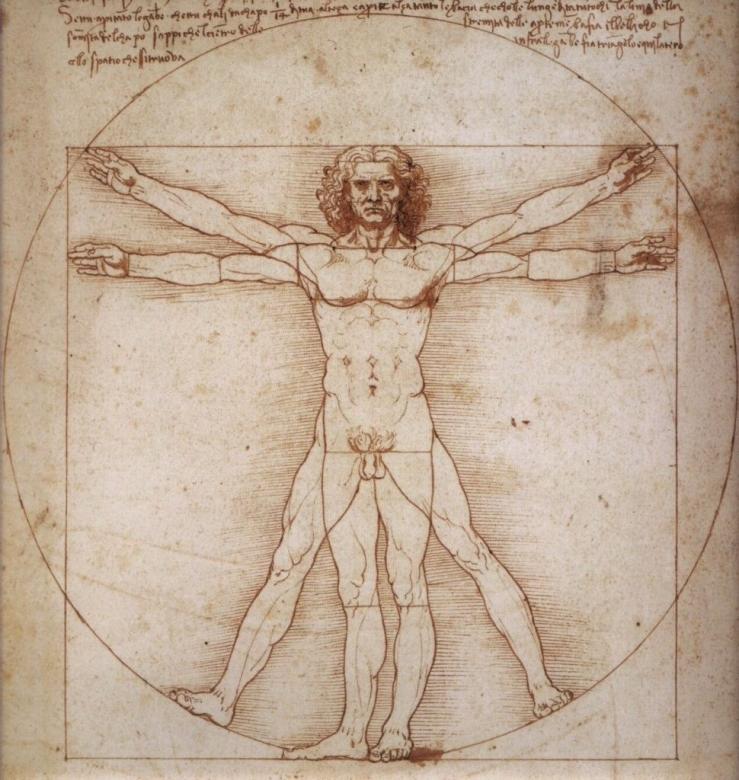
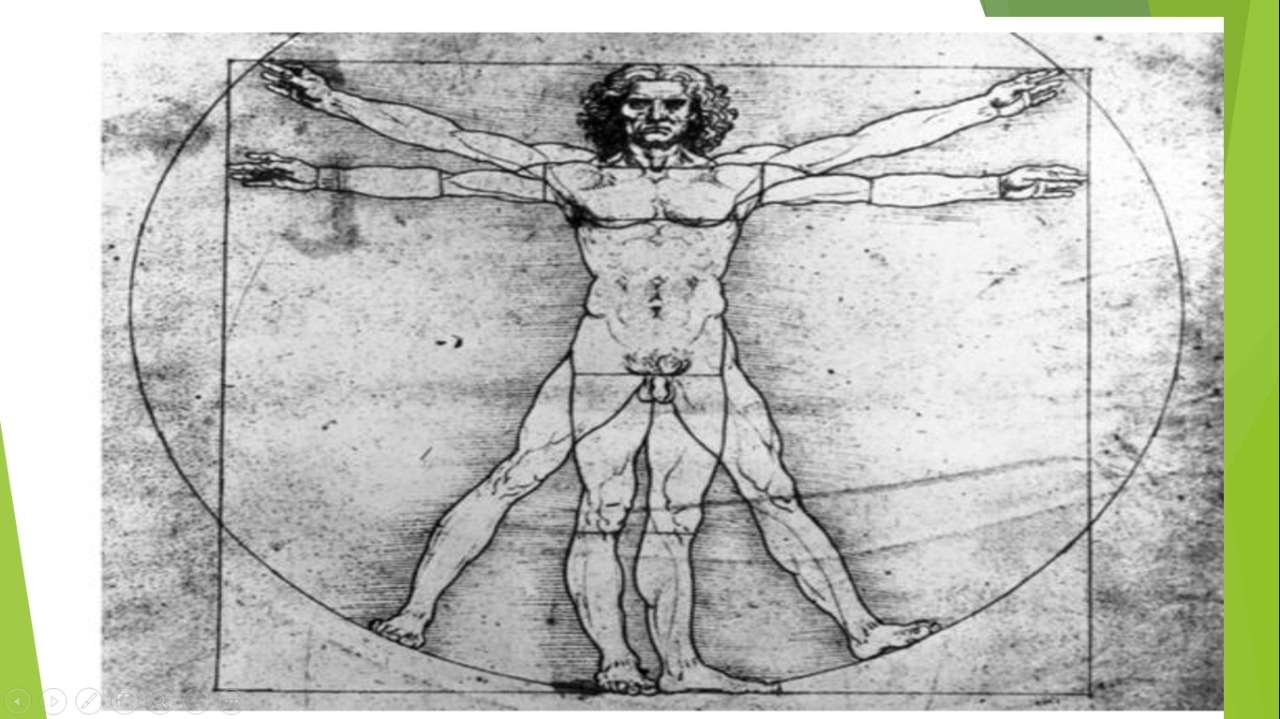
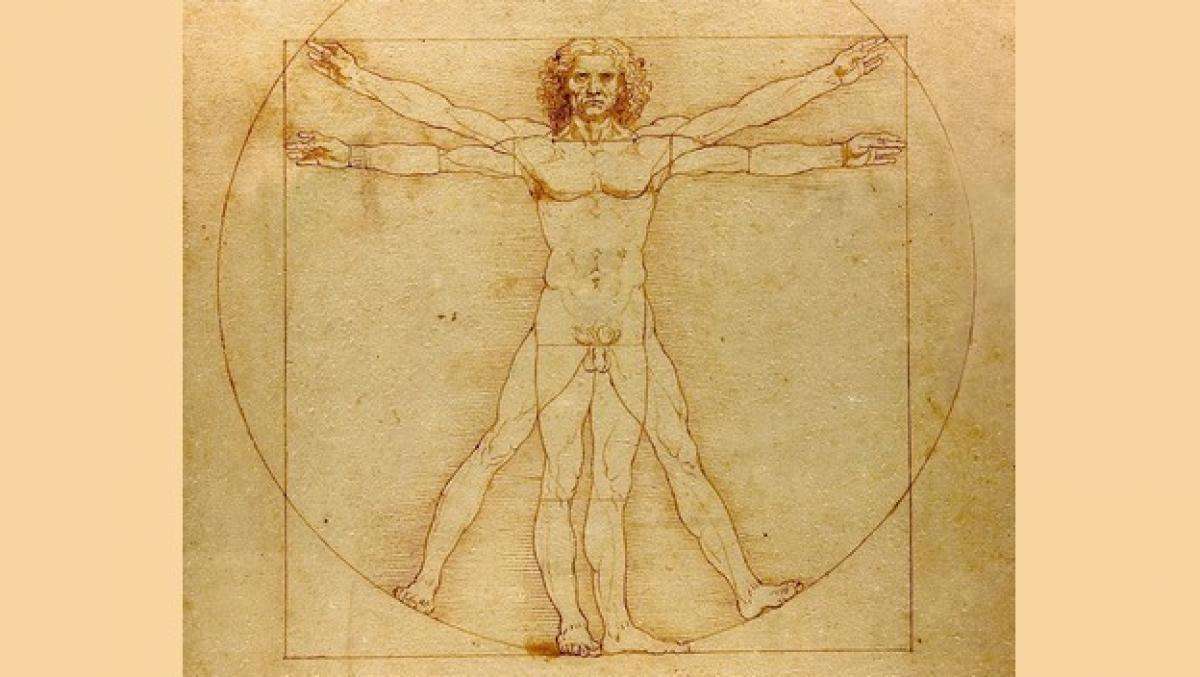
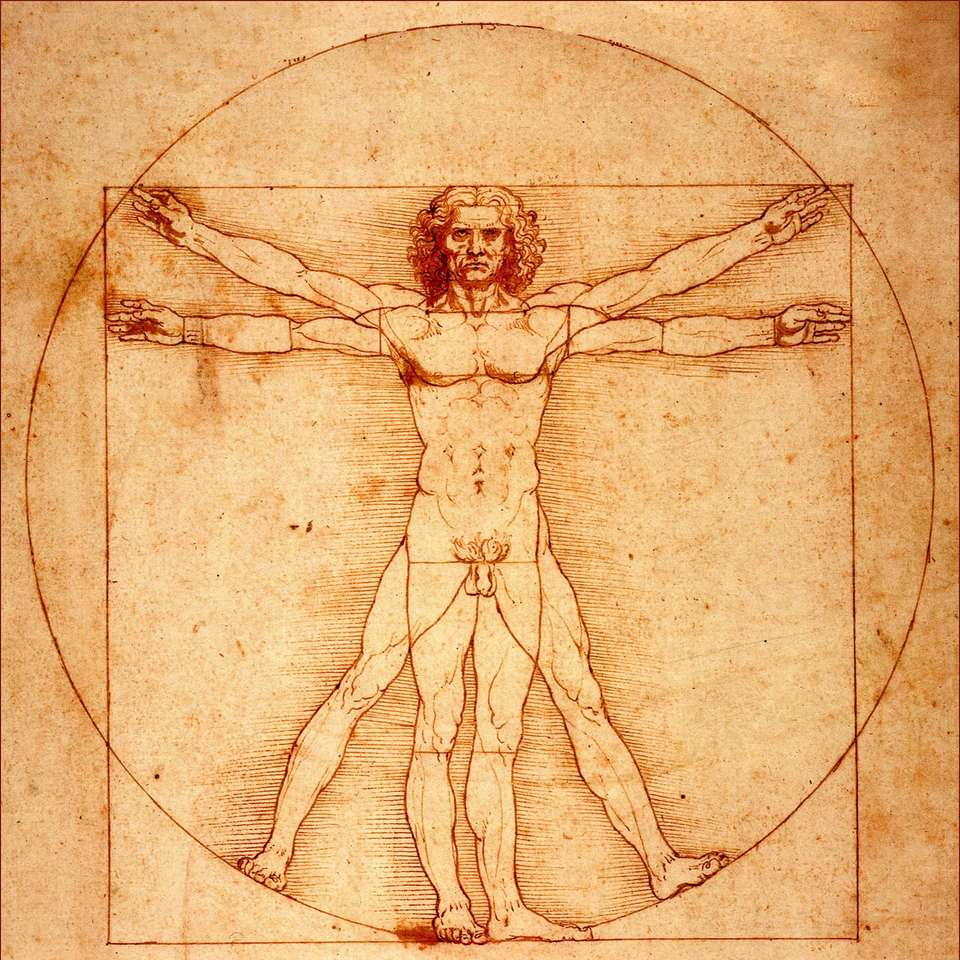
The Vitruvian Man (Italian: L'uomo vitruviano [ˈlwɔːmo vitruˈvjaːno]; originally known as Le proporzioni del corpo umano secondo Vitruvio, lit. 'The proportions of the human body according to Vitruvius') is a drawing made by the Italian polymath Leonardo da Vinci in about 1490. It is accompanied by notes based on the work of the Roman architect Vitruvius. The drawing, which is in ink on paper, depicts a man in two superimposed positions with his arms and legs apart and inscribed in a circle and square. It is kept in the Gabinetto dei disegni e delle stampe of the Gallerie dell 'Accademia, in Venice, Italy, under reference 228. Like most works on paper, it is displayed to the public only occasionally, so it is not part of the normal exhibition of the museum. The work was however, on display at the Louvre 's exhibit of Da Vinci 's work, from 24 October 2019 to 24 February 2020 after the museum won a legal battle with the Galleria.The drawing represents ideal human body proportions. Its inscription in a square and a circle comes from a description by the ancient Roman architect Vitruvius in Book III of his treatise De architectura. Yet, as it has been demonstrated, Leonardo did not represent Vitruvius's proportions of the limbs but included those he found himself after measuring male models in Milan. While the drawing is named after Vitruvius, some scholars today question the appropriateness of such a title.