Vihuela - online puzzles

Online puzzle Vihuela
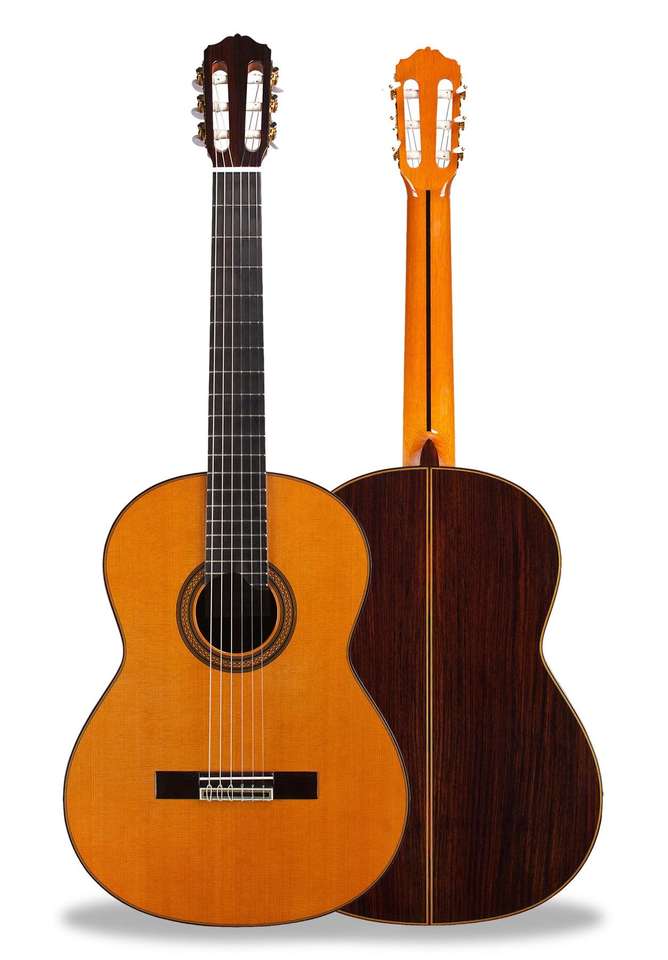
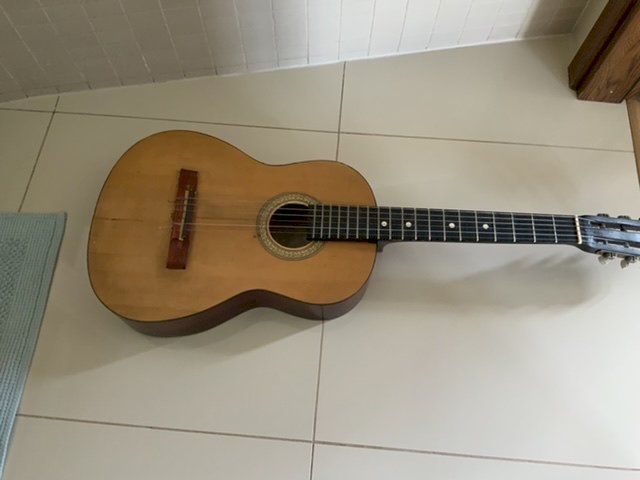
The vihuela (Spanish pronunciation: [biˈwela]) is a 15th-century fretted plucked Spanish string instrument, shaped like a guitar (figure-of-eight form offering strength and portability) but tuned like a lute. It was used in 15th- and 16th-century Spain as the equivalent of the lute in Italy and has a large resultant repertory. There were usually five or six doubled strings.
A bowed version, the vihuela de arco (arco meaning bow), was conceived in Spain and made in Italy from 1480. One consequence was the phrase vihuela de mano being thereafter applied to the original plucked instrument. The term vihuela became " viola " in Italian ("viole" in Fr.; " viol " in Eng.), and the bowed vihuela de arco was to serve as prototype in the hands of the Italian craftsmen for the "da gamba" family of fretted bowed string instruments, as developed starting in 1480. Their vihuela-inherited frets made these easier to play in tune than the ribeca family (precursors of the "da braccio" family ), and so they became popular for chamber music.
History
The vihuela, as it was known in Spanish, was called the viola de mà in Catalan, viola da mano in Italian and viola de mão in Portuguese.[1] The two names are functionally synonymous and interchangeable. In its most developed form, the vihuela was a guitar -shaped instrument with six double-strings (paired courses) made of gut. Vihuelas were tuned identically to their contemporary Renaissance lute; 4ths and mid-3rd (44344, almost like a modern guitar tuning, with the exception of the third string, which was tuned a semitone lower).