Placerias - online puzzles
Online puzzle Placerias
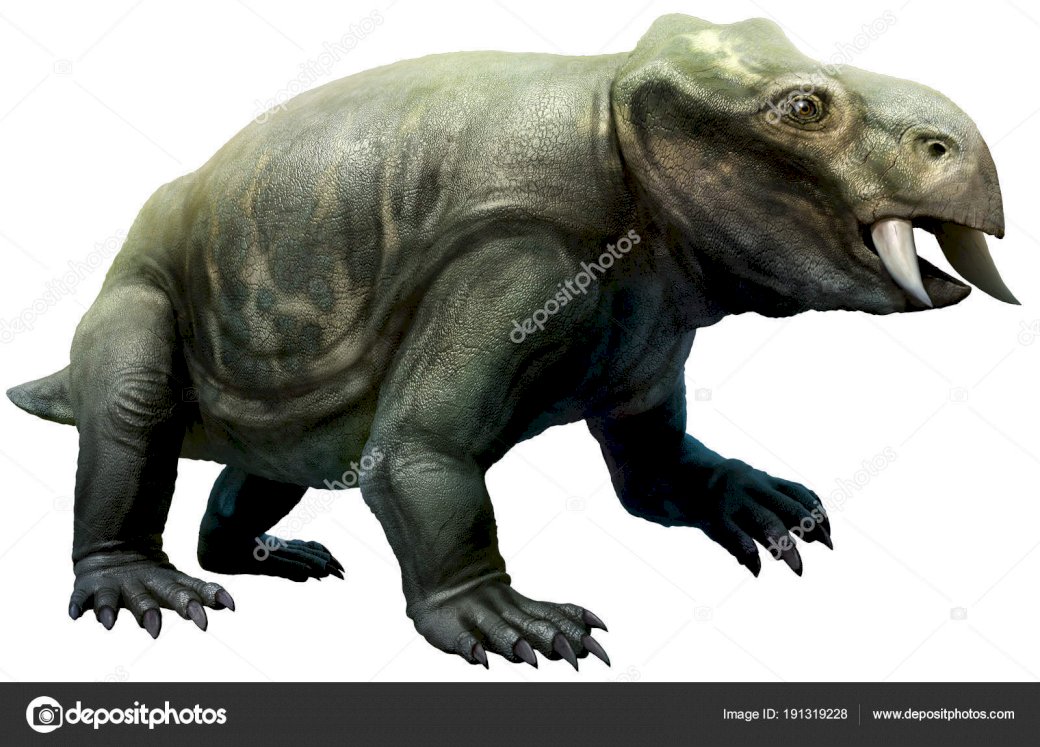
Placerias (meaning 'broad body') is an extinct genus of dicynodonts that lived during the late Carnian age of the Triassic Period (221-210 million years ago). Placerias belongs to a group of dicynodonts called Kannemeyeriiformes, which was the last known group of dicynodonts before dicynodonts became extinct at the end of the Triassic.
Description
Placerias was one of the largest herbivores in the Late Triassic, measuring up to 3.5 metres (11.5 ft) long and weighing up to a tonne (1000 kilograms) with a powerful neck, strong legs, and a barrel -shaped body. There are possible ecological and evolutionary parallels with the modern hippopotamus, spending much of its time during the wet season wallowing in the water, chewing at bankside vegetation. Remaining in the water would also have given Placerias some protection against land -based predators such as Postosuchus. Placerias used its beak to slice through thick branches and roots with two short tusks that could be used for defence and for intra-specific display. Placerias was closely related to Ischigualastia and similar in appearance.
Discovery
Fossils of forty Placerias were found near St. Johns, southeast of the Petrified Forest in the Chinle Formation of Arizona. This site has become known as the 'Placerias Quarry ' and was discovered in 1930, by Charles Camp and Samuel Welles, of the University of California, Berkeley.