Pastrami - online puzzles




Online puzzle Pastrami
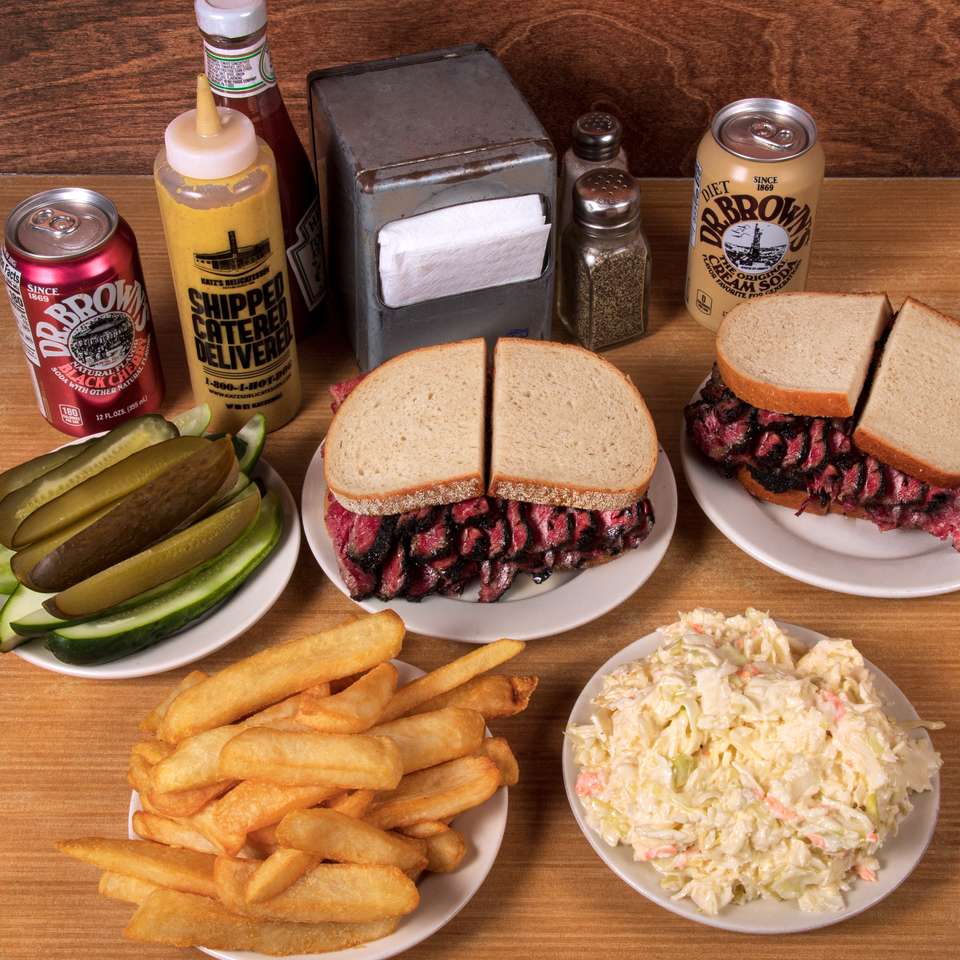
Pastrami (Romanian: pastramă) is a meat product of Romanian origin usually made from beef brisket, and sometimes from lamb, or turkey. The raw meat is brined, partially dried, seasoned with herbs and spices, then smoked and steamed. Beef plate is the traditional cut of meat for making pastrami, although it is now common in the United States to see it made from beef brisket, beef round, and turkey. Like corned beef, pastrami was originally created as a way to preserve meat before refrigeration.
Etymology and origin
The name pastrami comes from Romanian pastramă, a declination of the Romanian verb păstra meaning "to conserve food, to keep something for a long duration" whose etymology is linked to the Turkish pastırma, short for Turkish: bastırma et "pressed meat." Wind-dried beef had been made in Anatolia for centuries, and Byzantine dried meat is thought by some to be "one of the forerunners of the pastirma of modern Turkey".Early references in English used the spelling "pastrama", closer to the Romanian pastramă. Pastrami was introduced to the United States in a wave of Jewish immigration from Bessarabia and Romania in the second half of the 19th century. The modified "pastrami" spelling was probably introduced in imitation of the American English salami. Romanian Jews emigrated to New York as early as 1872. Among Jewish Romanians, goose breasts were commonly made into pastrami because they were inexpensive. Beef navel was cheaper than goose meat in America, so the Romanian Jews in America adapted their recipe and began to make the cheaper-alternative beef pastrami.New York's Sussman Volk is generally credited with producing the first pastrami sandwich in the United States in 1887.