Human evolution - online puzzles
Online puzzle Human evolution
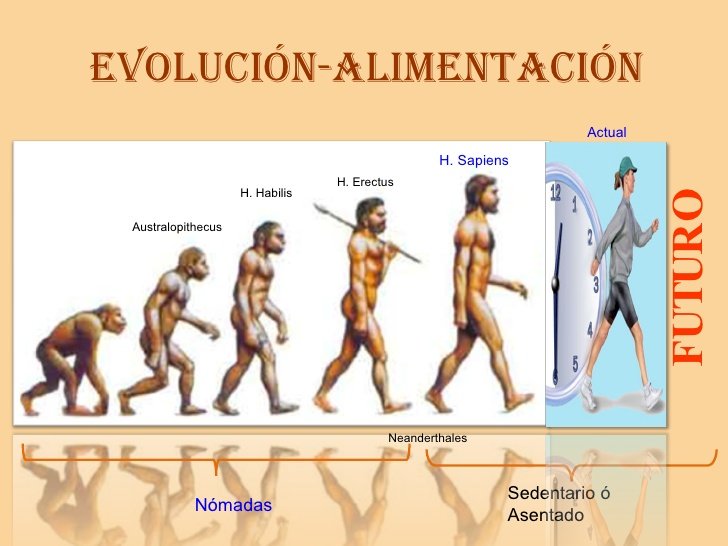
Human evolution is the evolutionary process that led to the emergence of anatomically modern humans, beginning with the evolutionary history of primates—in particular genus Homo—and leading to the emergence of Homo sapiens as a distinct species of the hominid family, the great apes. This process involved the gradual development of traits such as human bipedalism and language, as well as interbreeding with other hominins, which indicate that human evolution was not linear but a web.The study of human evolution involves several scientific disciplines, including physical anthropology, primatology, archaeology, paleontology, neurobiology, ethology, linguistics, evolutionary psychology, embryology and genetics. Genetic studies show that primates diverged from other mammals about 85 million years ago, in the Late Cretaceous period, and the earliest fossils appear in the Paleocene, around 55 million years ago.Within the Hominoidea (apes aka hominoids) superfamily, the Hominidae (great apes aka hominids) family diverged from the Hylobatidae (lesser apes aka gibbons etc.) family some 15–20 million years ago; Homininae (African apes) subfamily diverged from Ponginae (orangutans ) about 14 million years ago; the Hominini tribe (including humans, Australopithecines and other extinct biped genera, and chimpanzees) parted from the Gorillini tribe (gorillas) between 8–9 million years ago; and, in turn, the subtribes Hominina (hominins, humans and extinct biped ancestors) and Panina (chimpanzees) separated 4–7 million years ago.
Anatomical changes
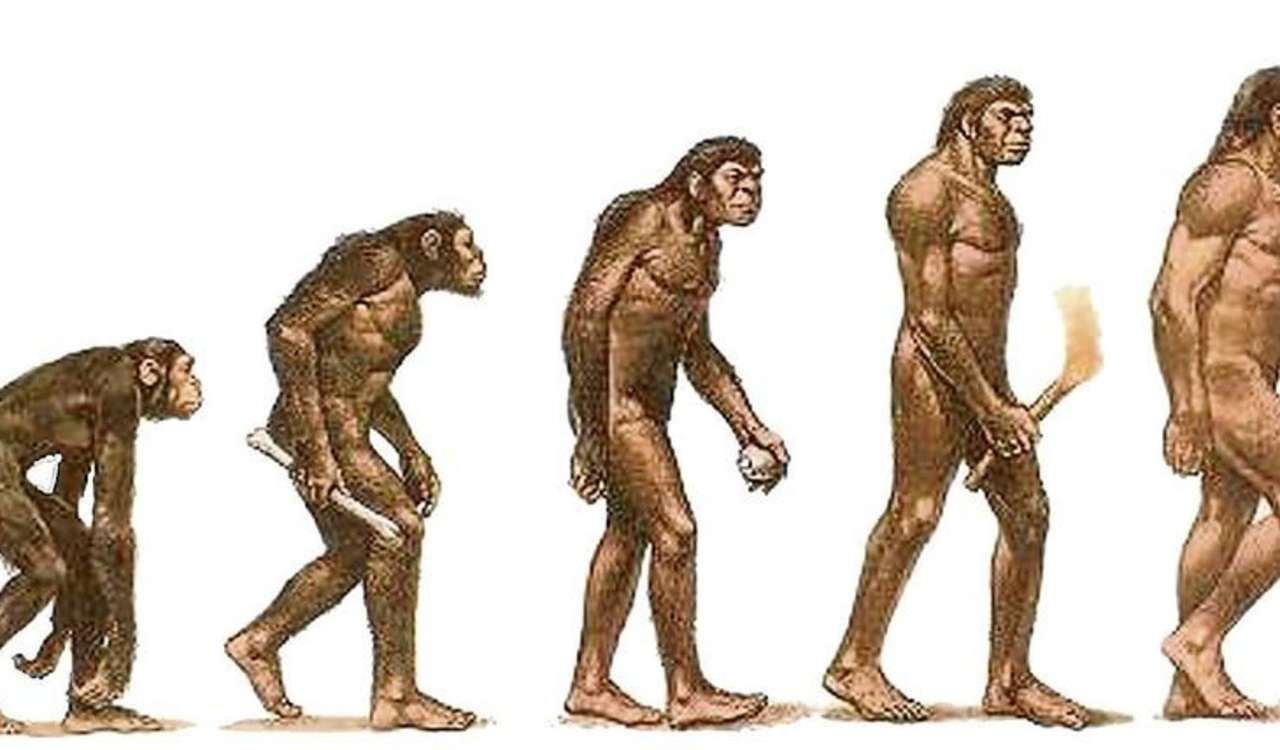
Human evolution from its first separation from the last common ancestor of humans and chimpanzees is characterized by a number of morphological, developmental, physiological, and behavioral changes. The most significant of these adaptations are bipedalism, increased brain size, lengthened ontogeny (gestation and infancy), and decreased sexual dimorphism. The relationship between these changes is the subject of ongoing debate. Other significant morphological changes included the evolution of a power and precision grip, a change first occurring in H. erectus.
Bipedalism
Bipedalism is the basic adaptation of the hominid and is considered the main cause behind a suite of skeletal changes shared by all bipedal hominids. The earliest hominin, of presumably primitive bipedalism, is considered to be either Sahelanthropus or Orrorin, both of which arose some 6 to 7 million years ago. The non-bipedal knuckle-walkers, the gorillas and chimpanzees, diverged from the hominin line over a period covering the same time, so either Sahelanthropus or Orrorin may be our last shared ancestor.