Demogorgon - online puzzles
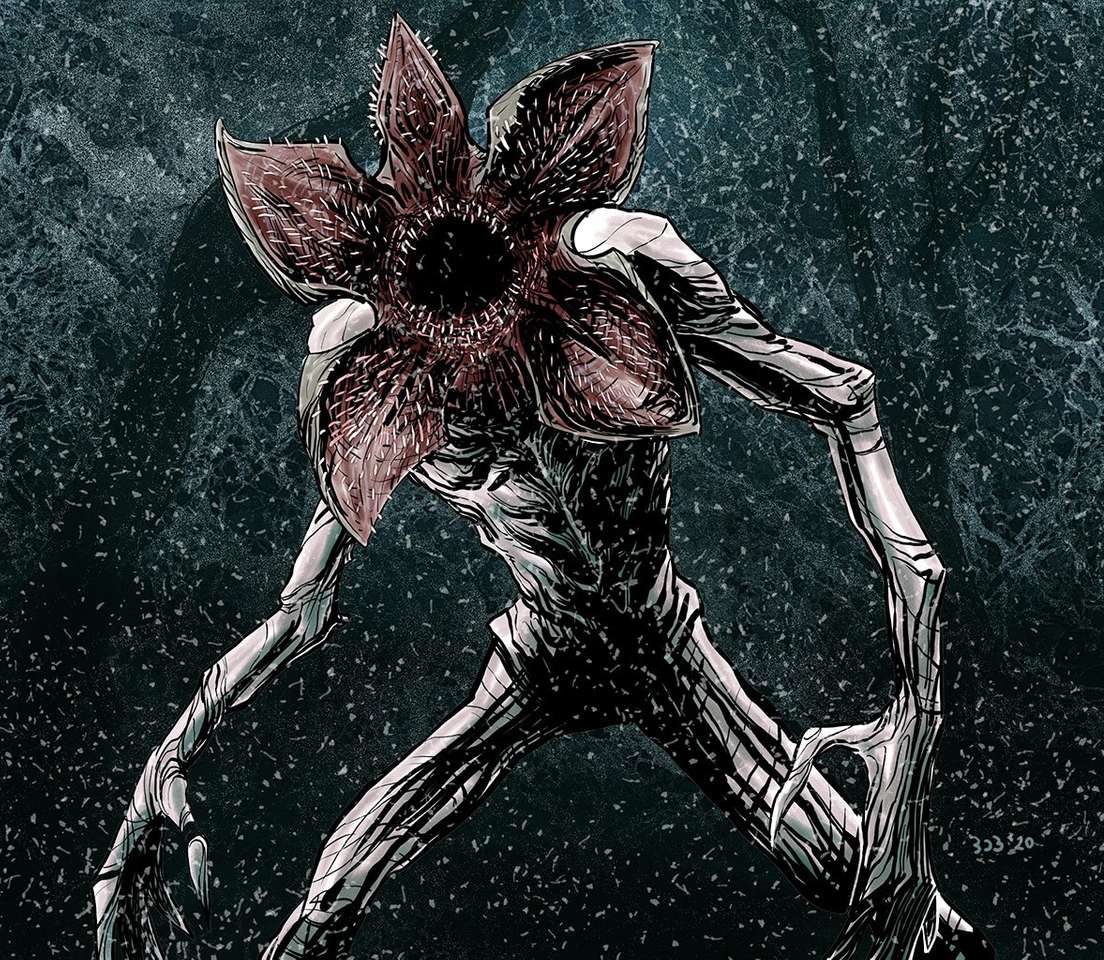



Online puzzle Demogorgon
Demogorgon is a deity or demon, associated with the underworld and envisaged as a powerful primordial being, whose very name had been taboo. Although often ascribed to Greek mythology, the name probably arises from an unknown copyist's misreading of a commentary by a fourth-century scholar, Lactantius Placidus. The concept itself though can be traced back to the original misread term demiurge.
Etymology
The origins of the name Demogorgon are not entirely clear, though the most prevalent scholarly view now considers it to be a misreading of the Greek δημιουργόν (dēmiourgón, accusative case form of δημιουργός, 'demiurge') based on the manuscript variations in the earliest known explicit reference in Lactantius Placidus (Jahnke 1898, Sweeney 1997, Solomon 2012). Boccaccio, in his influential Genealogia Deorum Gentilium, cites a now lost work by Theodontius, and that master's acknowledged Byzantine source, "Pronapides the Athenian", as authority for the idea that Demogorgon is the antecedent of all the gods. Art historian Jean Seznec concludes that "Demogorgon is a grammatical error, become god." The name variants cited by Jahnke include the Latin "demoirgon", "emoirgon", "demogorgona", "demogorgon", with the first critical editor Friedrich Lindenbrog (Fridericus Tiliobroga) having conjectured "δημιουργόν" as the prototype in 1600. Various other theories suggest that the name is derived from a combination of the Greek words δαίμων daimon ('spirit' given the Christian connotations of 'demon' in the early Middle Ages)—or, less likely δῆμος dêmos ("people")—and γοργός gorgós ("quick") or Γοργών Gorgṓn, the Ancient Greek monsters first attested in Hesiod's Theogony.
Derivation and history
Demogorgon is first mentioned in the commentary on Statius's Thebaid often attributed in manuscripts to a Lactantius Placidus, (c. 350–400 AD). The Lactantius Placidus commentary became the most common medieval commentary on the poem by Statius and is transmitted in most early editions up to 1600.