Augmentative and alternative communication - online puzzles






























Online puzzle Augmentative and alternative communication
Augmentative and alternative communication
Augmentative and alternative communication (AAC) encompasses the communication methods used to supplement or replace speech or writing for those with impairments in the production or comprehension of spoken or written language. AAC is used by those with a wide range of speech and language impairments, including congenital impairments such as cerebral palsy, intellectual impairment and autism, and acquired conditions such as amyotrophic lateral sclerosis and Parkinson's disease. AAC can be a permanent addition to a person's communication or a temporary aid. Stephen Hawking, probably the best-known user of AAC, had amyotrophic lateral sclerosis, and communicated through a speech-generating device.
Modern use of AAC began in the 1950s with systems for those who had lost the ability to speak following surgical procedures. During the 1960s and 1970s, spurred by an increasing commitment in the West towards the inclusion of disabled individuals in mainstream society and emphasis on them developing the skills required for independence, the use of manual sign language and then graphic symbol communication grew greatly. It was not until the 1980s that AAC began to emerge as a field in its own right. Rapid progress in technology, including microcomputers and speech synthesis, paved the way for communication devices with speech output, and multiple options for access to communication for those with physical disabilities.
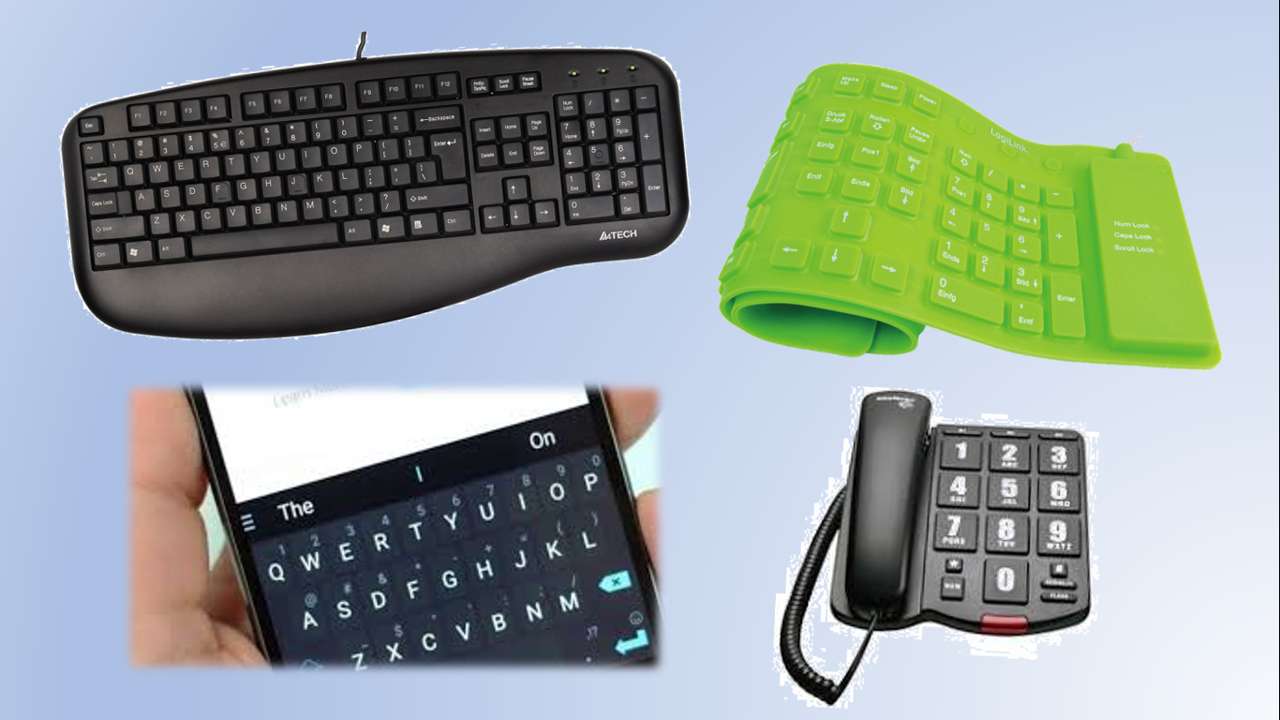
AAC systems are diverse: unaided communication uses no equipment and includes signing and body language, while aided approaches use external tools. Aided communication methods can range from paper and pencil to communication books or boards to speech generating devices (SGDs) or devices producing written output. The elements of communication used in AAC include gestures, photographs, pictures, line drawings, letters and words, which can be used alone or in combination. Body parts, pointers, adapted mice, or eye tracking can be used to select target symbols directly, and switch access scanning is often used for indirect selection. Message generation through AAC is generally much slower than spoken communication, and as a result rate enhancement techniques have been developed to reduce the number of selections required. These techniques include prediction, in which the user is offered guesses of the word/phrase being composed, and encoding, in which longer messages are retrieved using a prestored code.
The evaluation of a user's abilities and requirements for AAC will include the individual's motor, visual, cognitive, language and communication strengths and weaknesses. The evaluation requires the input of family members, particularly for early intervention. Respecting ethnicity and family beliefs are key to a family-centered and ethnically competent approach. Studies show that AAC use does not impede the development of speech, and may result in a modest increase in speech production. Users who have grown up with AAC report satisfying relationships and life activities; however, they may have poor literacy and are unlikely to be employed.
While most AAC techniques controlled by the user are reliable, two techniques (facilitated communication and the rapid prompting method) have arisen which falsely claim to allow people with intellectual disabilities to communicate. These techniques involve an assistant (called a facilitator) guiding a disabled person to type on a keyboard or point at a letter board. It has been shown that the facilitator, rather than the disabled person, is the source of the messages generated in this way. There have been a large number of false allegations of sexual abuse made through facilitated communication.
The Convention on the Rights of Persons with Disabilities defines augmentative and alternative communication as forms of communication including languages as well as display of text, large-print, tactile communication, plain language, accessible multimedia and accessible information and communications technology.
The field was originally called "Augmentative Communication"; the term served to indicate that such communication systems were to supplement natural speech rather than to replace it. The addition of "alternative" followed later, when it became clear that for some individuals non-speech systems were their only means of communication. AAC communicators typically use a variety of aided and unaided communication strategies depending on the communication partners and the context. There were three, relatively independent, research areas in the 1960s and 1970s that lead to the field of augmentative and alternative communication. First was the work on early electromechanical communication and writing systems. The second was the development of communication and language boards, and lastly there was the research on ordinary (without disability) child language development.